
Mon–Fri: 9 AM–5 PM · Sat–Sun: Closed Arvada (720) 819-5919
Remodel Pro Colorado
How to Improve Bathroom Ventilation at Home

Arvada Local

How to Improve Bathroom Ventilation at Home

Moisture damage is preventable. Here is where most bathrooms fall short.

Request an estimate

Tell us what you need

No obligation


By submitting this form you agree that we may contact you about your request and share your name and email address with partner companies for email marketing. We never share your mobile number or text message consent with third parties or affiliates for marketing or promotional purposes.

Signs Your Bathroom Has an Airflow Problem

A bathroom can look freshly remodeled and still have a hidden problem: damp air trapped after every shower. Proper airflow protects paint, drywall, cabinetry, grout, and the framing behind your walls, not just comfort. For homeowners in Arvada, Westminster, Golden, and Broomfield, ventilation deserves particular attention during a bathroom remodel. Colorado's dry climate makes a steamy mirror seem harmless, but repeated moisture exposure inside a closed bathroom can still lead to peeling paint, mildew, warped trim, and mold growth.

The right solution depends on your bathroom's size, layout, existing ductwork, and how the room is used. Some fixes are straightforward, a new fan, a timer switch. Others require opening walls or rerouting duct runs. Either way, catching the problem early is far less expensive than repairing moisture-damaged materials later.

Warning Signs of Poor Bathroom Ventilation

Look for these before assuming the fan is working.

Persistent Mirror Fog

Condensation that hangs around for more than an hour after a shower points to air that is not moving. A properly rated fan clears a standard bathroom in under 15 minutes.

Ceiling Dark Spots

Discoloration above the shower or near the fan grille often signals mold, not dirt. It means moisture is reaching the ceiling surface repeatedly before it can dry.

Recurring Mildew on Grout

If you clean grout and mildew returns within a few days, the room is holding too much humidity. No cleaner fixes that, only airflow does.

Peeling Paint or Bubbling Drywall

Moisture that enters wall cavities through failed finishes is expensive to repair. Drywall repair after moisture damage costs far more than a fan upgrade.

  • A mirror or window that stays fogged long after a shower
  • Peeling paint, bubbling drywall, or dark spots on the ceiling
  • Musty odors that return shortly after cleaning
  • Mildew forming repeatedly around caulk, grout, or window trim
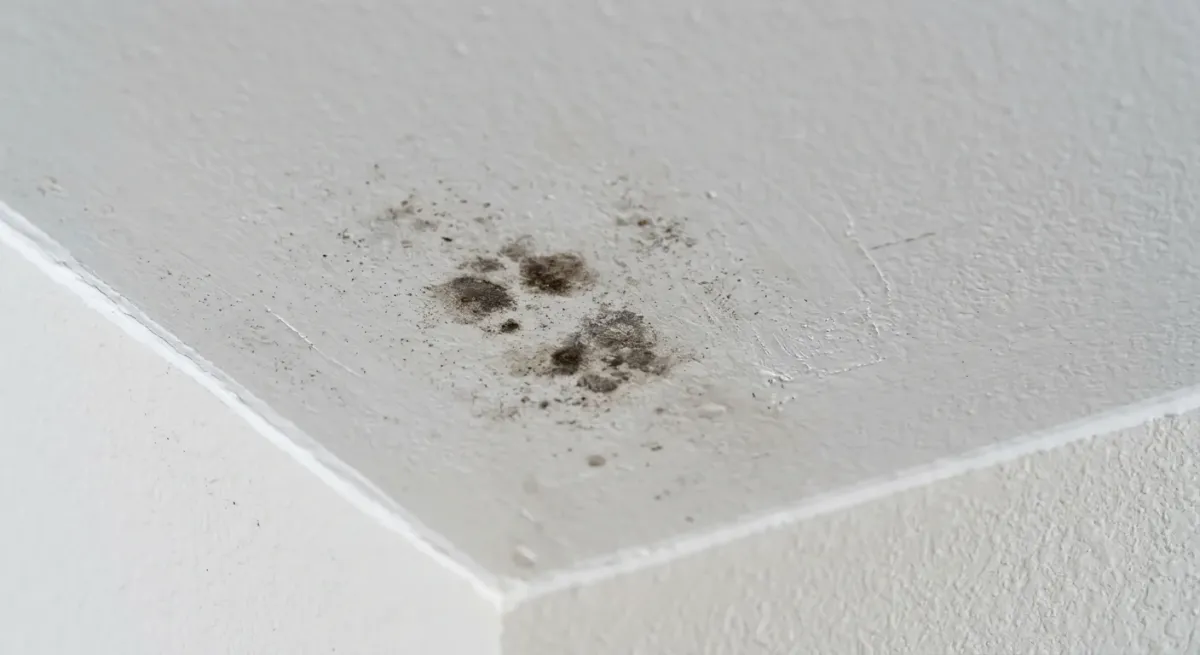
ceiling dark spots work, illustration in Arvada, CO

Fan Sizing

Size the Fan for the Room, Not the Old Opening

Bathroom fans are rated in CFM, or cubic feet per minute. A basic rule is to provide at least 1 CFM per square foot of bathroom floor area for bathrooms up to 100 square feet. A 50-square-foot bathroom, for example, generally needs a fan rated at least 50 CFM. That baseline is not always enough. A larger bathroom, a room with a separate toilet area, a high ceiling, or a frequently used walk-in shower may need more capacity. Condensation that remains for an hour or appears in several areas of the room points to an airflow problem worth addressing. Noise matters too. Fan sound is measured in sones. Lower sone ratings mean quieter operation. A loud fan may move plenty of air, but if family members avoid switching it on because it sounds like a small engine, it will not solve the moisture problem. Quiet models are more likely to be used consistently.
persistent mirror fog work, illustration in Arvada, CO

Duct Routing

Make Sure the Fan Vents Outdoors

An exhaust fan should terminate outside the home, not in an attic, crawlspace, soffit cavity, or garage. Venting moist air into an enclosed area simply moves the problem. In an attic, that moisture condenses on framing and insulation, creating conditions that may lead to mold or wood deterioration. The duct route also affects performance. Short, straight, insulated duct runs move air more efficiently than long, sagging, flexible ducts with multiple turns. In Colorado winters, insulating ductwork that passes through unconditioned attic space helps reduce condensation inside the duct itself. If a fan runs but the bathroom remains humid, the issue may be the ducting rather than the fan. A remodeling contractor can check whether the existing duct is connected, properly sized, and routed to an exterior termination point.

Place the Fan Where Moisture Starts

Location is just as important as capacity. The fan should be close to the shower or tub, where the highest concentration of moisture is produced. A fan installed near the bathroom door may still remove some air, but it has to work harder to capture steam before it spreads across the room. In a larger bathroom, one fan may not be enough. A primary fan near the shower and a smaller secondary fan near the toilet or vanity area can handle the full room more effectively. During a bathroom remodel, fan placement is far easier to get right before the ceiling is closed than after.

Controls That Keep the Fan Running Long Enough

Turning the fan off when the shower ends is one of the most common mistakes.

Timer Switch

A simple timer switch lets you set the fan to run for 15 to 30 minutes after bathing, then shut off automatically. It is one of the most cost-effective ventilation upgrades available.

Humidity-Sensing Switch

A humidity sensor turns the fan on when moisture reaches a set level and off once the air returns to normal. It requires no manual operation and is especially useful in busy households.

Motion Sensors

Motion sensors work in powder rooms but can fall short in full bathrooms. If the sensor turns the fan off too quickly after someone leaves, it may not provide enough post-shower run time.
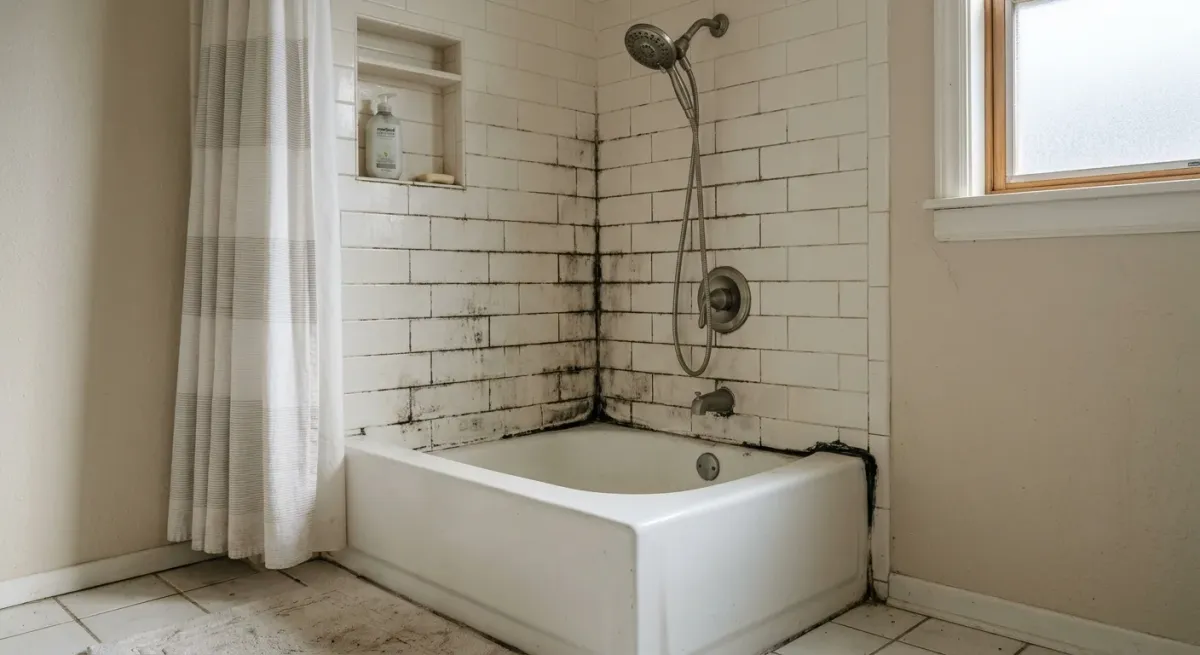
recurring mildew on grout work, illustration in Arvada, CO

Improve Airflow Beyond the Exhaust Fan

A fan cannot remove air effectively if replacement air cannot enter the room. Bathrooms need a path for fresh air to come in as humid air exits. A small clearance beneath the bathroom door often provides enough airflow. In some situations, particularly in tightly built homes or bathrooms with substantial renovations, a door grille or transfer vent may be appropriate. This is a detail best evaluated carefully, since it can affect privacy and sound transmission. Opening the door after showering helps the room dry faster. Cracking a window when weather permits adds natural cross-ventilation. These habits do not replace a properly functioning exhaust fan, but they reduce how hard the fan has to work.

Materials and Finishes That Work With the Fan

Ventilation and durable finishes work together. If your bathroom has damaged grout, failed caulk, loose tile, or deteriorating drywall around the shower, humid air and direct water exposure can find their way into areas that should stay dry. No amount of airflow compensates for a failed waterproofing detail. During a bathroom remodel, the right time to look behind finished surfaces is before new materials go up. Proper waterproofing around showers and tubs, well-sealed transitions between materials, and backer board selected for wet areas all reduce the demand on the ventilation system. Paint selection matters too. Bathroom ceilings and walls benefit from finishes designed to resist moisture and allow easier cleaning. Even so, no paint compensates for a fan that cannot move enough air or vents into the wrong location.
peeling paint or bubbling drywall work, illustration in Arvada, CO

When Ventilation Should Be Part of a Remodel

Some ventilation improvements are straightforward. Others require planning.

Replacing an existing fan or adding a timer switch can often be done without major disruption. Rerouting duct runs, adding a second fan, or relocating a fan to a better position in the ceiling requires access above the ceiling, which is far easier to coordinate during a full remodel than as a standalone repair. If you are planning a bathroom remodel in Arvada or the surrounding Denver metro area, ventilation is worth addressing at the same time as tile, fixtures, and cabinetry. A contractor who understands how moisture moves through a bathroom will spec the fan, duct route, and controls together, not as an afterthought. For questions about how ventilation fits into a broader renovation scope, contact Remodel Pro Colorado to discuss your project.

Planning a Bathroom Remodel?

Remodel Pro Colorado, Veteran-Owned, Arvada, CO

Next step

Tell us about the job

Your name, your number and what needs doing. A person from Remodel Pro Colorado gets back to you.

Rather talk now?(720) 819-5919

No obligation


By submitting this form you agree that we may contact you about your request and share your name and email address with partner companies for email marketing. We never share your mobile number or text message consent with third parties or affiliates for marketing or promotional purposes.