
Mon–Fri: 9 AM–5 PM · Sat–Sun: Closed Arvada (720) 819-5919
Remodel Pro Colorado
Linear Drain vs. Standard Shower Drain: Which Fits?

Arvada Local

Linear Drain vs. Standard Shower DrainWhich Fits?

The drain you choose shapes every other decision in a custom shower build.

Request an estimate

Tell us what you need
No obligation


By submitting this form you agree that we may contact you about your request and share your name and email address with partner companies for email marketing. We never share your mobile number or text message consent with third parties or affiliates for marketing or promotional purposes.

standard point drain work, illustration in Arvada, CO

Two Drains, One Decision Worth Getting Right

A shower drain is easy to overlook until it affects nearly every decision around it: the shower floor tile, curb height, glass placement, cleaning routine, and overall look. When weighing a linear drain vs. a standard shower drain, the better option is not automatically the more modern-looking one. It is the drain that works with your bathroom layout, budget, tile selection, and plans for the space.

Changing drain direction after tile work begins is costly and disruptive. Getting this right at the planning stage, before material is ordered, is the kind of decision that saves money and prevents regret.

What Each Drain Actually Does

The two types differ in geometry, not just appearance.

Standard Point Drain

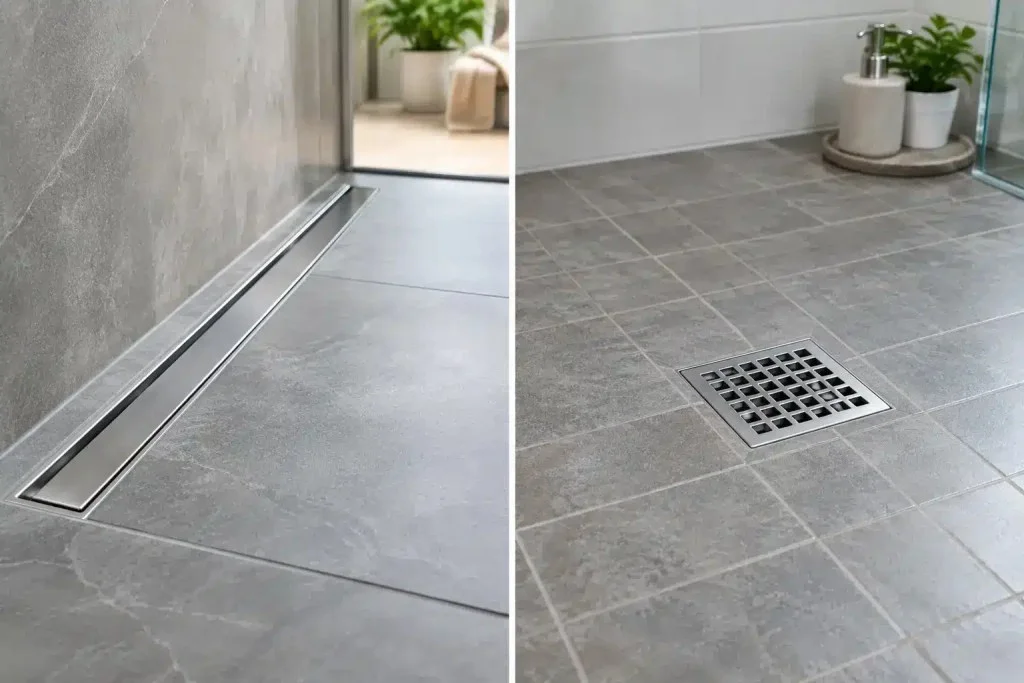
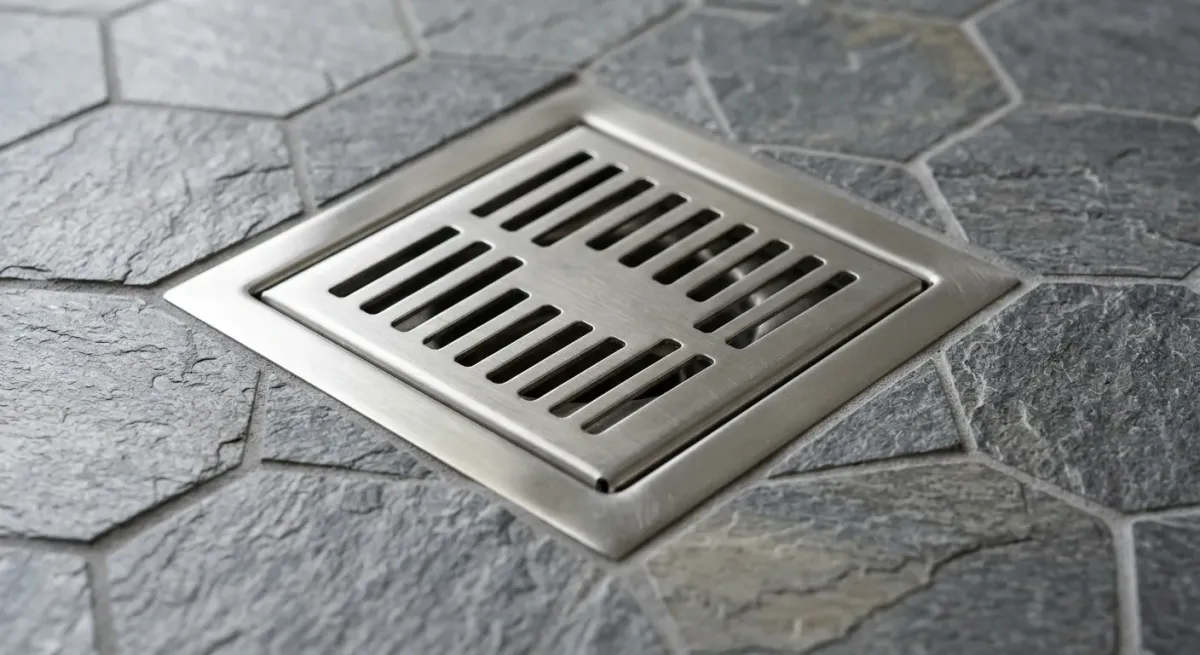
Usually round or square, positioned near the center of the shower floor. Water slopes toward that single point from every direction. This is the familiar option found in most traditional showers, practical, widely available, and straightforward to install when the existing plumbing already runs to that spot.

Linear Channel Drain

A long, narrow channel drain, commonly installed along one wall or at the shower entrance. Because it spans the width of the floor, the entire surface slopes in one direction only. That single-plane slope is what makes large-format tile work cleanly, fewer cuts, no awkward multi-directional angles.

linear channel drain work, illustration in Arvada, CO

Where a Linear Drain Adds the Most Value

The strongest case for a linear drain is usually design flexibility. A wall-positioned linear drain allows large porcelain tiles or natural stone-look tiles to continue across the shower floor with fewer cuts. Instead of creating several angled planes around a center drain, the tile installer builds one consistent slope toward the channel. This can be especially effective in a wide walk-in shower. The floor looks calmer and more intentional, and the drain can blend into the room with a tile-in insert or a low-profile metal grate. For homeowners building a contemporary bathroom remodel with frameless glass and larger tile, that detail supports the clean, open look they want. Linear drains are also worth considering for curbless shower designs. A drain along the back wall keeps it out of the main walking path and directs water away from the bathroom entry. A drain at the shower entrance can create a clear water-catching line, but it needs precise slope and careful glass or door planning. The best placement depends on the showerhead location, spray pattern, shower dimensions, and whether the enclosure is fully open or has a fixed panel.
mosaic and small format tile work, illustration in Arvada, CO

Important

The Curbless Caveat

"Can" is the key word. A curbless shower depends on the existing floor framing, subfloor depth, drain elevation, and waterproofing approach. In many homes, achieving the required slope without raising the bathroom floor or modifying framing takes careful planning. The drain style alone does not guarantee a truly barrier-free result. If you are considering a bathtub-to-shower conversion and have your heart set on a curbless entry, have a contractor evaluate the existing framing before you commit to a drain type or tile selection. That evaluation can be the difference between a plan that works and one that requires expensive structural changes mid-project.

When a Standard Drain Is the Smarter Call

A point drain is not the old option. It is often still the right one.

Smaller Shower Floors

For a shower under roughly 36 inches wide, a linear drain offers little design advantage. The slope geometry difference is minimal, and the added cost of the drain body and longer grate is hard to justify.

Mosaic and Small-Format Tile

Mosaic porcelain, small stone tile, and penny tile follow multi-directional slopes naturally. The extra grout lines also add traction, genuinely useful in a wet area. A point drain works with this tile size without awkward cuts or lippage.

Budget-Conscious Updates

A standard drain is less expensive to purchase and install, particularly in a straightforward replacement project. The savings are real when the existing rough plumbing already terminates at center floor. Rebuilding a shower pan correctly still requires precise slope, compatible waterproofing, and a tested drain connection, but those costs apply to both drain types.

Existing Plumbing Location

If the current drain stub-out is centered, moving it to a wall for a linear drain adds labor and rough plumbing cost. That relocation may be worth it for the right shower, but it should be a deliberate choice, not an assumption buried in an estimate.

Tile Size Changes the Equation

Standard point drains require a floor that slopes from several directions. Large tiles do not bend, so installers must make more cuts to form those planes. Depending on the material and pattern, the result can look busy or create edges that are uncomfortable underfoot. Linear drains simplify that geometry because the floor slopes in one direction only. A 24x48 porcelain plank can run across the shower floor with a single long cut at the far wall rather than a series of triangular pieces around a center drain. If you love the look of a large-format shower floor, discuss the tile size, drain location, and layout before ordering material. A good plan prevents disappointing cuts and helps the finished shower look balanced from the bathroom doorway. This is especially worth raising early if you are also planning new tile work in adjacent areas, the floor pattern often connects to the rest of the bathroom.

Cost and Installation: What to Expect

Neither drain is universally cheaper once the full scope is on the table.

Linear Drain Material Cost

The drain body, grate, and waterproofing membrane for a linear drain typically cost more than their point-drain equivalents. Stainless grates range widely by finish and length. Tile-in grates add more. Budget the drain itself as a line item, not an afterthought.

Linear Drain Installation

Installation can require more detailed substrate preparation. The channel must be perfectly level along its length while the floor slopes toward it. Waterproofing a linear drain correctly takes more precision than a standard drain collar, which is why the installer's experience matters as much as the drain brand.

Standard Drain Cost

A standard drain is less expensive to purchase, and installation is familiar to most tile contractors. The real cost variable is whether the shower pan needs to be rebuilt, the existing slope is incorrect, or the waterproofing system needs to be replaced, not the drain hardware itself.

Plumbing Relocation

If switching from a centered point drain to a wall-positioned linear drain requires moving the rough plumbing, that labor cost can offset much of the drain hardware savings. Get that number before the tile is ordered.

Cleaning and Long-Term Maintenance

A standard drain typically has a smaller grate and a compact opening. Cleaning is familiar, but reaching hair caught below the grate can be less convenient depending on the trap design. A linear drain has a longer grate that lifts out fully, making the channel easy to wipe. The tradeoff is that the channel itself collects more debris along its length. Consider the grate style alongside the drain type. Tile-in linear drains are subtle and blend into the floor, but the grout inside the channel requires the same maintenance as shower floor grout, and the channel is narrower. Brushed stainless grates are easier to clean but more visible. Neither drain type is maintenance-free, and neither should be cleaned with harsh products that can damage finishes or grout.

Our standard

Making the Right Call for Your Shower

The right drain is the one that fits your floor, your tile, and your plumbing, not just the look you want.

For homeowners in Arvada, Westminster, Golden, and Broomfield, it is also worth working with a contractor who evaluates the existing bathroom before promising a particular shower style. Older homes may have framing limitations, plumbing constraints, or floor-height challenges that affect the most practical solution. Honest guidance early in the process protects the budget and avoids last-minute design compromises. If you are ready to talk through a custom shower remodel, Remodel Pro Colorado evaluates the existing space before making any drain or tile recommendation.

Tim OverhultzOwner, Remodel Pro Colorado

  • Large-format tile (18" or bigger)

    Linear drain simplifies slope geometry and reduces cuts

  • Shower under 36" wide

    Standard point drain is practical and cost-effective

  • Curbless entry planned

    Confirm framing depth and drain elevation before committing

  • Existing plumbing centered

    Relocating to a wall adds labor. Get that cost upfront

Ready to Plan Your Shower Remodel?

Drain decisions are easier with someone who's seen the floor.

Next step

Tell us about the job

Your name, your number and what needs doing. A person from Remodel Pro Colorado gets back to you.

Rather talk now?(720) 819-5919

No obligation


By submitting this form you agree that we may contact you about your request and share your name and email address with partner companies for email marketing. We never share your mobile number or text message consent with third parties or affiliates for marketing or promotional purposes.